
KENOSHA Theatre; Kenosha, Wisconsin.
Uploaded By

Featured Theater

Kenosha, WI
More Photos


Photo Info
Uploaded on: January 18, 2026
Size: 57.1 KB
Views: 508
License:

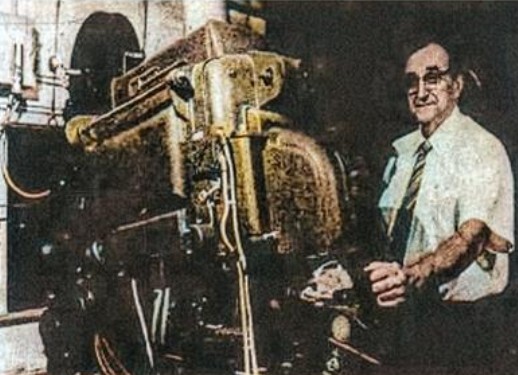
(10 Tuesday, January 2, 1973) Stanley Przlomski is the man everybody boos when the picture at the movie theater turns into a shirring blur right at the time the killer is crawling through the bedroom window with a knife towards the sleeping heroine.
Przlomski, 78, 6211 40th Ave., is a movie projectionist and he’s been at it at the Lake Theater in downtown Kenosha since 1963, and, before that, at the old Kenosha Theater next to the Dayton Hotel from 1927.
“The old Kenosha Theater is brick warehouse now,” he said. “I was the only man who was there at its opening performance in 1927 and its closing show in 1963.”
But Przlomski’s been around a movie projector longer than since 1927. He got his start in 1907 at his birthplace town of Menominee, Mich, with a 1,000-foot reel that unwound into a large metal drum below the projector.
Recalls Nickel Shows
In his youthful heyday it cost a nickel to see the 10-minute, thousand-foot reel. “That’s why they called it a nickel show,” he said.
Przylomski says there’s a lot of junk filling up the eyeballs today. He feels he’s a good judge of pictures because he’s seen a lot of junk in his day. In former days it may have been a sentimental epic with Mickey Rooney gushing over the girls. Today Przlomski says hunks of flesh do most of the contributing to the junkpile.
He won’t have to sit up in his booth looking at anything he doesn’t like anymore. Last Saturday was his last day in the booth. From now on he’ll be down with the paying customers. Maybe he’ll be there, too, when the blur wakes everybody up and the stomping begins.
Przlomski says there’s more to running a reel machine than just keeping the picture in focus.
“We keep an eye on the screen to be sure it’s in focus but we’ve got a lot of other duties to perform, too. We’ve got so many that hardly ever can we keep up with the story line,” he said. Some people pay $1.50 to sit in a soft seat and still can’t follow it. “The public thinks we just sit up there and read newspapers, I suppose,” he said.
Not A Soft Job
Even when he got his start, there was a lot more to being a projectionist than just sitting back, chewing popcorn and watching the neckers in the balcony.
In the early days when the 1,000-foot reel all uncoiled in the metal drum, Przlomski had to entertain the nickel customers while he rewound the first reel and prepared to run a second 1,000-foot segment. They really got their money’s worth in those days. He entertained them with illustrated songs on a stereopticon slide.
In a few years some genius came up with the automatic windup which meant Przlomski wouldn’t have to dig in his tub and rewind by hand the unravelled mess. “I thought the takeup would be the last word in projection,” he recalled.
The last word in film fare in that exciting era was the travelogue and the western. Prior to the 1920s the two reelers appeared. With the two-reeler, a story could be told because now there was 5,000 feet of film for a director to play with.
Remembers Bronco Bill
One of Przlomski’s two-reeler favorites was Bronco Billy Anderson. “Believe me that was a long time ago,” he said. D. W. Griffiths, with his “Birth of A Nation” classic, came along with the live orchestra, adding maturity and dimension to films. Sound in those days was provided by an orchestra in a pit and a half dozen sound men behind the transparent screen. When Bronco Billy was about to shoot on screen, a man would stand behind the screen and pull the trigger on a gun loaded with blanks. The shot would come at the same time Bronco Billy was picking the crook off his horse. It was a scenic trick. too. When the blank was fired there was a flash and it looked just like Bronco Billy’s pistol was spitting fire.
In 1919, after his World War I military service, Stan was in Kenosha looking for a job. Theater owners said they had none and back he went to Menominee. The day after he got home he got a call to get back to Kenosha. In 1927 he moved to the Kenosha Theater where he spent his best days. “We had vaudeville and film, an hour of vaudeville and an hour or an hour and half of film. There were five shows a day Saturdays, Sundays and holidays. The rest of the week there were only three, a matinee and two at night. You could sit there all day for a buck if you wanted. We had all the outstanding acts in vaudeville at the time. When I wasn’t running a film I would run the spotlight for the acts.”
Two men ran the spotlights and two the projectors. “We had two on the machines in the booth, more for safety’s sake than anything else. It was highly inflammable nitrate film and if it went, it would go up like gunpowder. When acetate tape came in one man could run the show. Acetate came in the 1950s.
Old Time Favorites
The best Przlomski saw on nitrate were John Barrymore, Charlie Chaplin, Francis X. Bushman and Beverly Bayne. If they weren’t his favorites, he still remembers Tom Mix, Hoot Gibson, William S. Hart and Blanche Sweet.
One of his favorite films was “Neptune’s Daughter” with Annette Kelleman, and a memorable series was “Million Dollar Mystery.” In the light of today’s talent, “Neptune’s Daughter” and the “Million Dollar Mystery” have a good chance at a comeback.
Przlomski says there’s a future for films but says it’s not in the bedroom. Anyway, he’s not too concerned about movies' future. He’s got his own retirement future to consider.
Some of that future is going to have Przlomski sitting in his chair late at night in front of his TV set. “Like everybody else, I’ll watch the old ones myself. It’ll be fun. I’ll get to pick out the characters I put on the screen.
 No one has favorited this photo yet