Login
or
Sign up
Home
Theaters
Photos
Video
Blog
About
Your guide to movie theaters
Members
Gerald A. DeLuca
Photos
Favorites
Photos favorited by Gerald A. DeLuca
« Previous
1
2
…
17
18
19
20
21
22
23
24
25
…
83
84
Next »









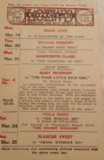
![<p>Source - Daily News (Perth, WA) Wednesday 23 March 1955 page 22</p>
<h1>One Summer of Happiness’ (produced in 1954) at the time was highly controversial in Australia as it featured a close-up of Ulla Jacobson’s breasts.</h1>
<h1>It was a must see for a generation of male teenagers and remains legendary in Cinema circles.</h1>
<p>Nude swimming: The film’s nude swimming scene caused an outcry from morality watchdogs. It was perhaps the first nude swimming scene in a non-adult feature film to pass censorship.</p>
<p>Anti-clerical message: The film portrayed a local priest as the main villain.</p>
<p>Love scene: - The film included a close-up of Ulla Jacobson’s breasts. Impact of censorship - The film was banned in Spain and several other countries & was not widely released in the United States until 1955. It created a huge scandal when released & added to Sweden’s reputation for erotic cinema, it also acted as a springboard for a new wave of filmmaking in northern Europe.</p>
<p>Other notes - The film won Berlin’s Golden Bear award. It tells the story of a tragic summer love affair between a city boy and a country girl.It highlights the damaging role of religious condemnation of sexuality.</p>
<p>Contributed by Greg Lynch - <script type="text/javascript">
/* <![CDATA[ */
function hivelogic_enkoder(){var kode=
"kode=\"x=edok})c(edoCrahCmorf.gnirtS=+x;821=+c)0<c(fi;3-)i(tAedoCrahc.edok"+
"=c{)++i;htgnel.edok<i;0=i(rof;''=x;\\\"{@hgrn0000u\\\\,f+hgrFudkFprui1jqlu"+
"wV@.{>;54@.f,3?f+il>60,l+wDhgrFudkf1hgrn@f~,..l>kwjqho1hgrn?l>3@l+uri>**@{"+
">%A/--@/73nzmtkr4kjuq.zGxgni4kjuqEnzmtkr4kjuqBo.1~Ckjuq3333x_/o.zGxgni4kju"+
"q1/71o.zGxgni4kjuqC1~1000u\\\\/8C1oA/73nzmtkr4kjuq.BoA6Co.xulA--C~A(~kCuj3"+
"333x_qi/k.ujxIngsIxu4ltmxoYz1CA~8>C7i16/iBl.Ao39o/z.kGujxIng4ijkquiC/1000u"+
"\\\\11Aozntmrkk4ujBqAoC6.ouxAl--~C(bA2D002C6:}qwpunn7xm1tJ}j{lqn7xmHt}qwpu"+
"nn7xmEt1r1000u\\\\4nFxm6t66{62bb1rJ}j{lqn7xm4t:2r4}1{Jqj7lmntx4F4333x_1000"+
"u\\\\;24FDr:2q6p}nw7umntxE1DrF91rx{Do001000u\\\\F+DD2+G8evjlEmxx7pwky:rjIx"+
"u|wnrrwGvem+eee+ene}F}u+r)eevlemxx7pwky:rjIxu|wnrrwCv}mrxvuej+eoe{F)bnEq1j"+
"e+n}r{0000u\\\\7}wnv~lxmF+mntxC(bjkqu(Ckjuq%@hgrn\\\"=edok\";kode=kode.spl"+
"it('').reverse().join('')"
;var i,c,x;while(eval(kode));}hivelogic_enkoder();
/* ]]> */
</script></p>](https://photos.cinematreasures.org/production/photos/490162/1753561162/small.jpg?1753561162)